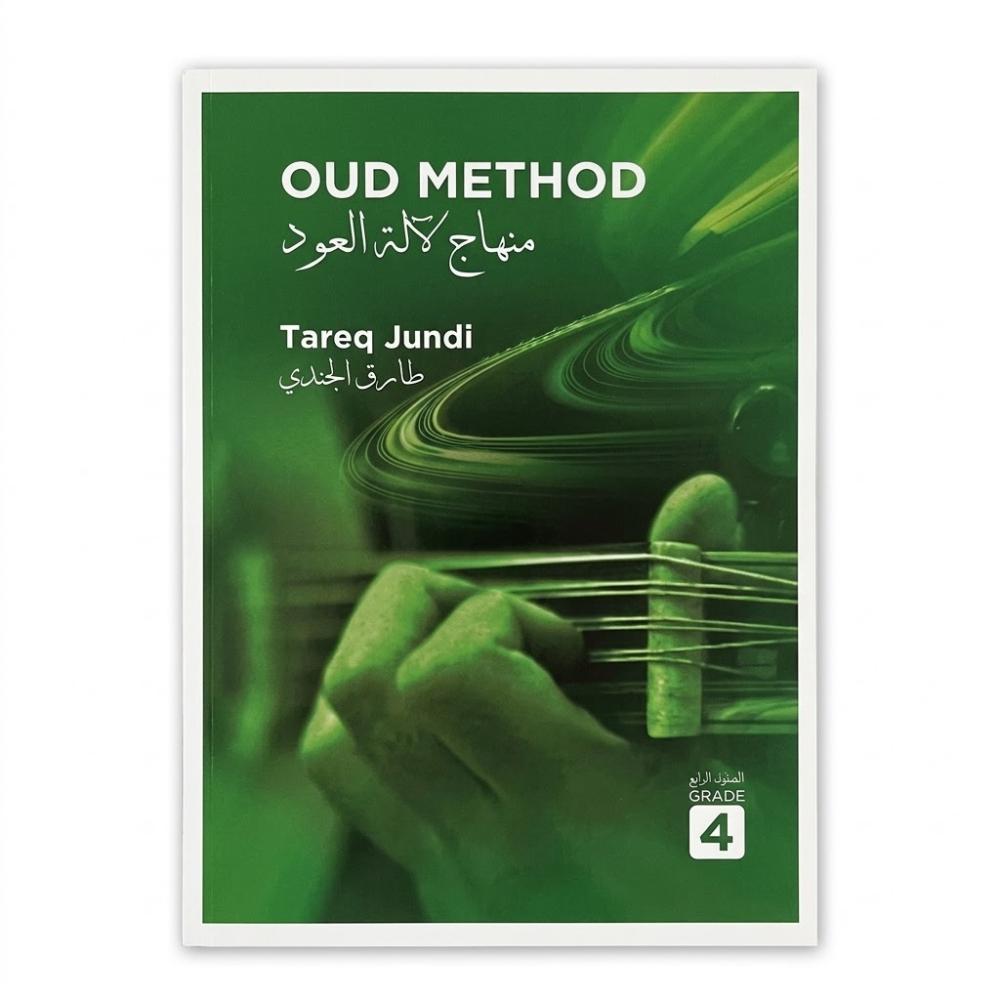
Methodology for the Oud instrument - Level Four
الكتاب باللغتين العربية والإنجليزية
The Maqam Book for the Oud: *This product contains only one book (Level Four Book)* The book has been printed in both Arabic and English. Introduction...
More
The Maqam Book for the Oud: *This product contains only one book (Level Four Book)* The book has been printed in both Arabic and English. Introduction: This book aims to introduce the Oud instrument to the student in a smooth and academic manner, presenting the theoretical part of music, including musical and rhythmic reading, in parallel with the practical part, and narrating some general information that helps improve the student's musical taste. Each book consists of a set of lessons aimed at equipping the student with various instrumental skills supported by some explanations to facilitate understanding, built gradually and systematically through individual lessons that can be applied using various available and diverse methods in this era. Each level of these books contains a collection of instrumental or vocal pieces in classical or free musical forms by deceased or contemporary composers, written in a way that suits the student's level for study and achieving the desired results. The goal is to introduce the student to the Eastern musical heritage, both instrumental and vocal, in addition to contemporary experiments that have developed this instrument in expressive and technical aspects, creating a balance between the instrumental heritage and the old or modern vocal heritage. It is necessary to study and practice both in a balanced manner to broaden horizons, gain experience, and develop expressive skills. These levels are divided as follows: Level One (Preparatory). Level Two (Beginner). Level Three (Intermediate First). Level Four (Intermediate Second). Level Five (Above Intermediate First). Level Six (Above Intermediate Second). Level Seven (Advanced First). Level Eight (Advanced Second). The number and diversity of modal and rhythmic pieces in each stage are sufficient to build a gradual and smooth Oud player. However, this does not prevent exploring other pieces from Arabic music references if the student shows excellence in completing the requirements of each lesson. Finally, this curriculum is based on a strategy of segmentation and analysis to teach the student how to learn, not just to memorize and restrict them to many similar applications, but to encourage inference and analysis, leading them into a musical maze that expands horizontally while limiting their overall vertical, cumulative, and constructive development in proportion to the time and effort they and the teacher invest.